AUTOMOTIVE INTERIOR MATERIAL DEVELOPMENT

Automotive interior leather,
engineered for every touchpoint.

A vehicle cabin is not a single surface. Seats, dashboards, door panels, and consoles each require a different material construction.

ROYI develops PU automotive interior leather and solvent-free full silicone leather for each component’s geometry, contact frequency, forming process, and buyer-defined validation requirements.
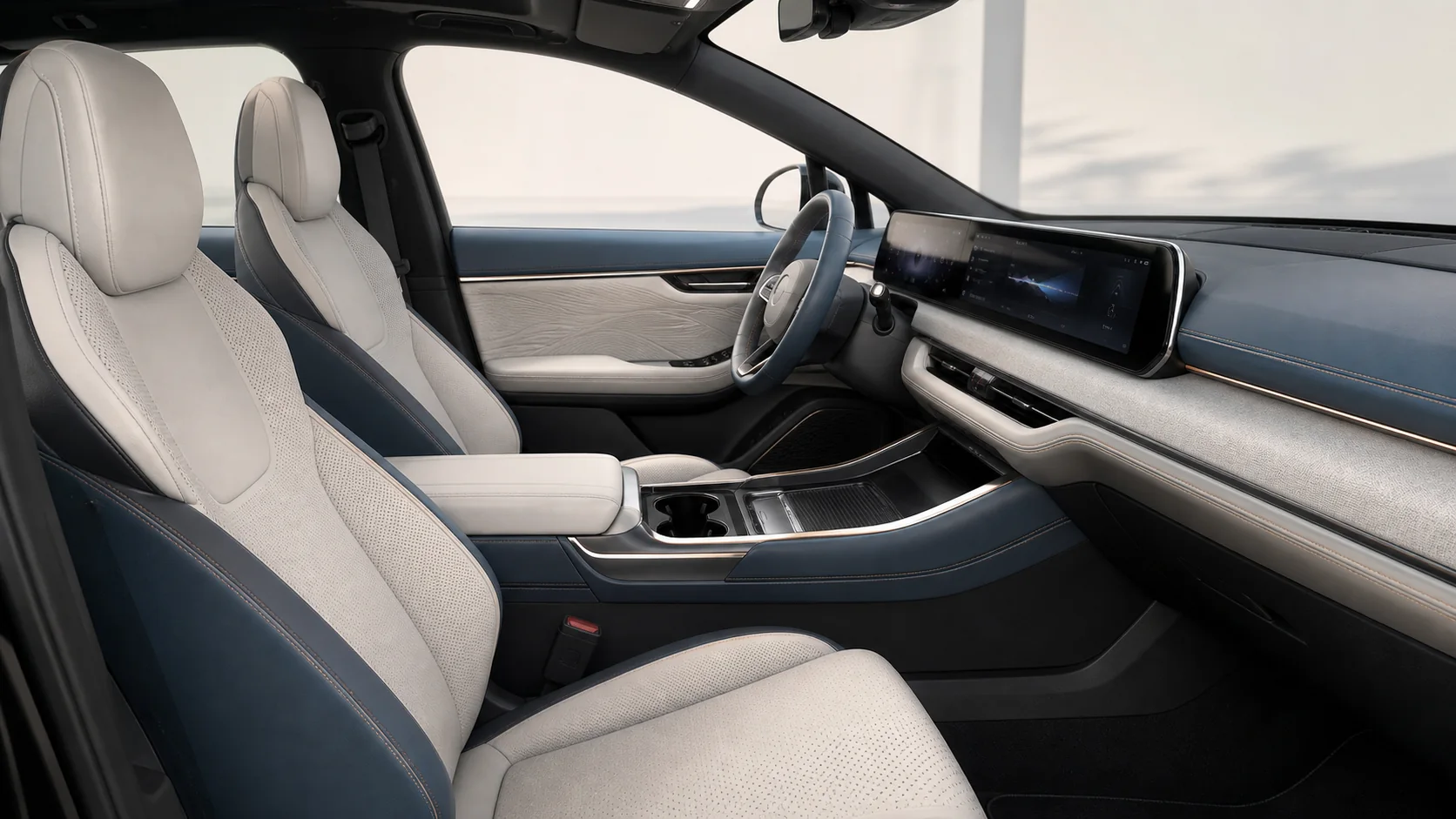
Representative electric vehicle cabin showing synthetic leather zones across seats, dashboard, doors and console
Representative material visualization · not test evidence

COMPONENT ATLAS

Start with where the surface lives.

Every zone changes the material brief.

01

Seats

Repeated contact · flex · seams · cleanability

02

Dashboard

Low gloss · heat/light · fogging plan · forming

03

Door panels

Emboss identity · lamination · abrasion · touch

04

Console & armrests

Skin oils · cleaners · edge wrap · high contact

05

Steering & shifter

Grip feel · sweat · seam support · repeated rub

MATERIAL ROUTES

Select chemistry after the component brief.

01

PU Automotive Interior Leather

Broad grain, color, handfeel and backing development for seating and trim surfaces.

  • Component-specific softness
  • Forming and lamination route
  • Buyer-defined test plan
View PU Leather →

02

Solvent-Free Full Silicone Leather

A low-odor development direction for premium touch surfaces and cleaner cabin programs.

  • Solvent-free silicone surface
  • Cleaning-protocol development route
  • Buyer-defined test plan
View Silicone Leather →

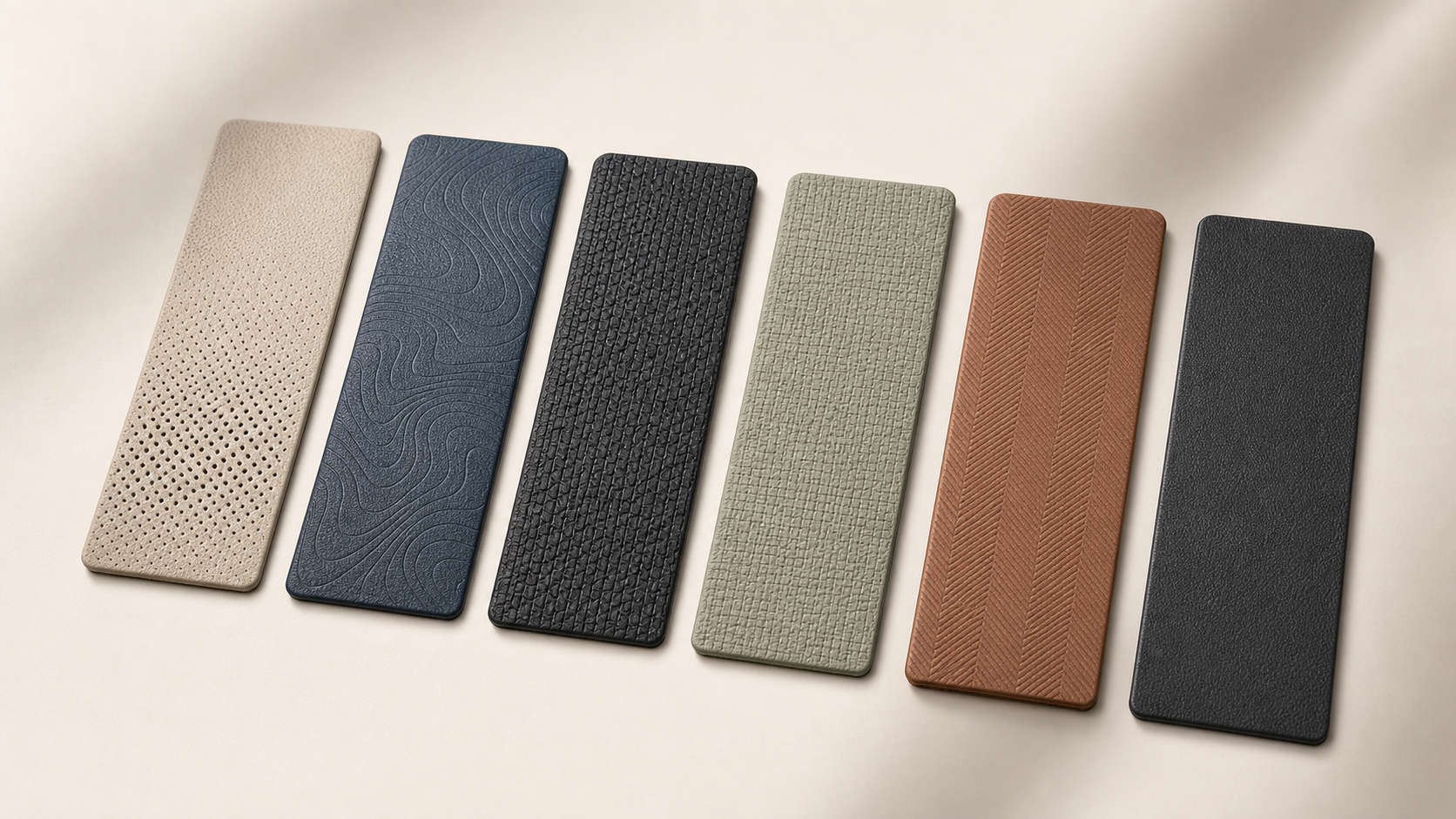
SURFACE LABORATORY

Texture is zoned for purpose and identity.

Six representative automotive synthetic leather swatches with varied colors, perforation and modern embossed textures
Representative CMF directions · not production-batch evidence
  1. Gradient microperforation
  2. Topographic microline
  3. Parametric rib
  4. Woven micrograin
  5. Offset chevron
  6. Clean matte grain

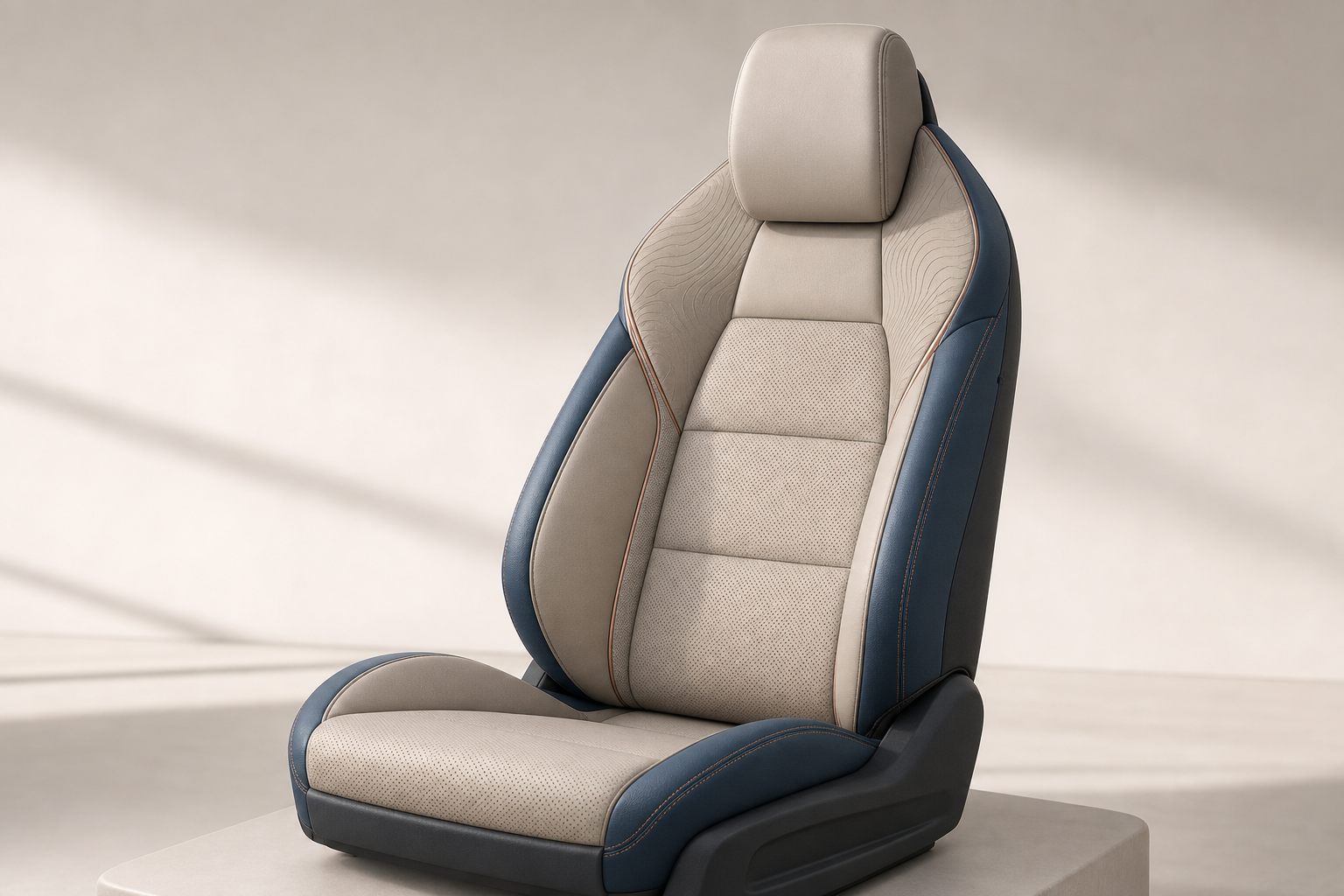
FUNCTIONAL ZONING

One seat, four surface jobs.

Representative automotive seat with distinct contact, bolster, shoulder and identity zones
Representative design visualization
Contact zone
Microperforation and repeated-contact planning
Bolster zone
Low-gloss grain and abrasion planning
Shoulder zone
Signature emboss and controlled forming
Seam zone
Thread, spacing, direction and layer support

CONSTRUCTION STACK

The visible surface is only the first layer.

  1. 01
    Topcoat / finish

    Gloss, touch, cleanability and surface protection direction

  2. 02
    PU or silicone surface body

    Color, grain, flex and surface identity

  3. 03
    Support or reinforcement

    Forming control, dimensional support and seam behavior

  4. 04
    Backing / lamination

    Bonding route matched to the component process

Complete construction first. Final performance must be confirmed on the approved color, grain, backing, lamination and production batch.

VALIDATION PLAN / RESULTS TO BE CONFIRMED

Build the test matrix around the component and buyer standard.

No quantitative result or certification is claimed here. Method, condition, specimen construction and acceptance target must be agreed before testing.

01

Cabin air

Odor · VOC · fogging

02

Safety

Flammability method

03

Contact wear

Abrasion · flex · scratch

04

Climate

Hydrolysis · heat · light

05

Assembly

Seam · peel · lamination

06

Care

Soil · cleaner · skin oils

COMPONENT DEVELOPMENT BRIEF

Send the component before selecting the grain.

Share the part drawing, forming and lamination process, color/texture target, complete construction, named buyer method and estimated volume.

  1. 01Component and touchpoint
  2. 02Geometry and forming
  3. 03Surface and backing
  4. 04Seam / lamination route
  5. 05Named test methods
  6. 06Volume and timing