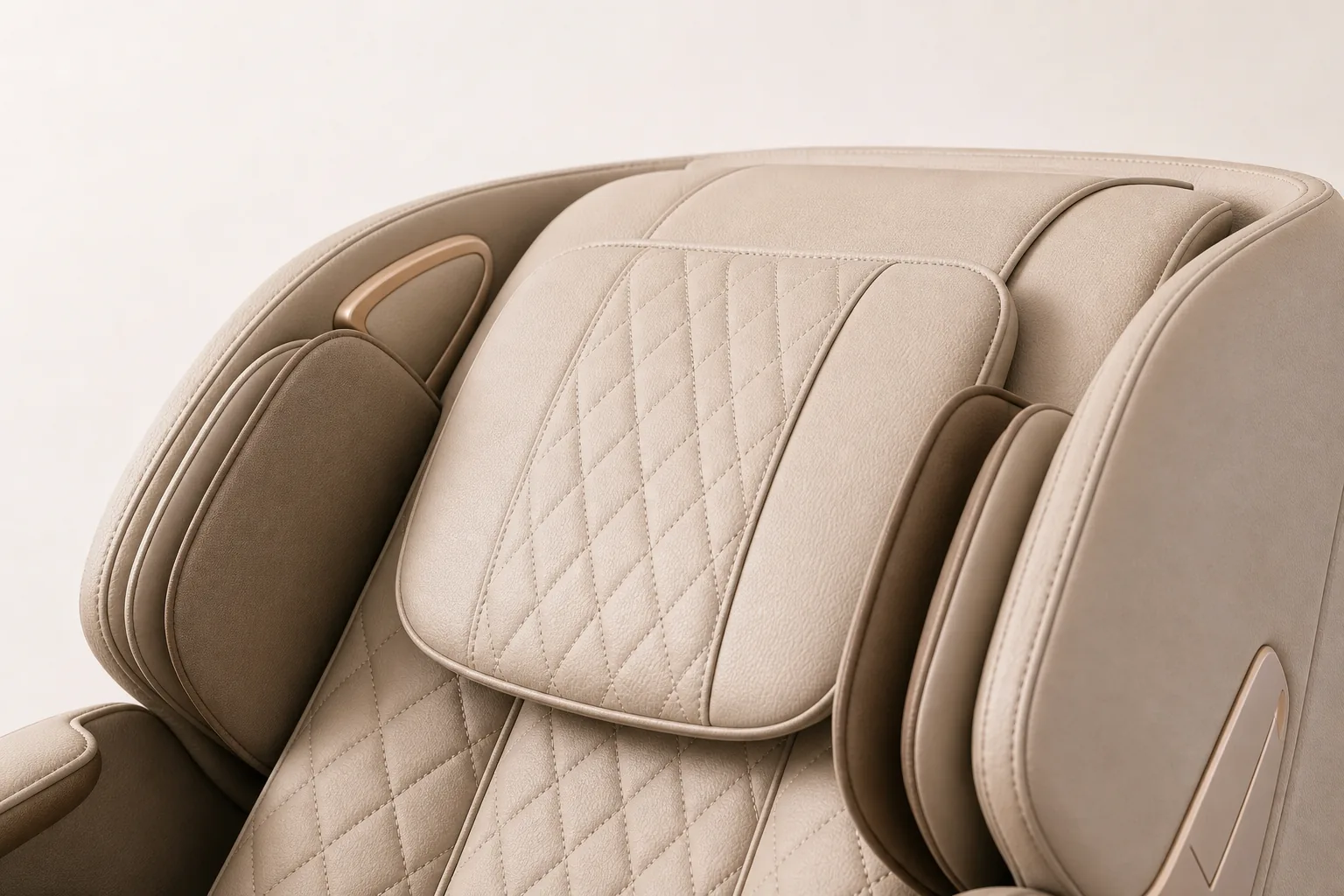
 01
01Head & neck
Review touch, repeated contact, seam placement and the approved surface reference.
Synthetic leather for massage-chair upholstery
The direct answer
There is no universal best material. Start with movement, contact, backing, assembly and buyer-defined validation.
ROYI compares Semi PU and solvent-free synthetic leather against the buyer’s panel map, surface reference, stretch direction and approved sample plan.
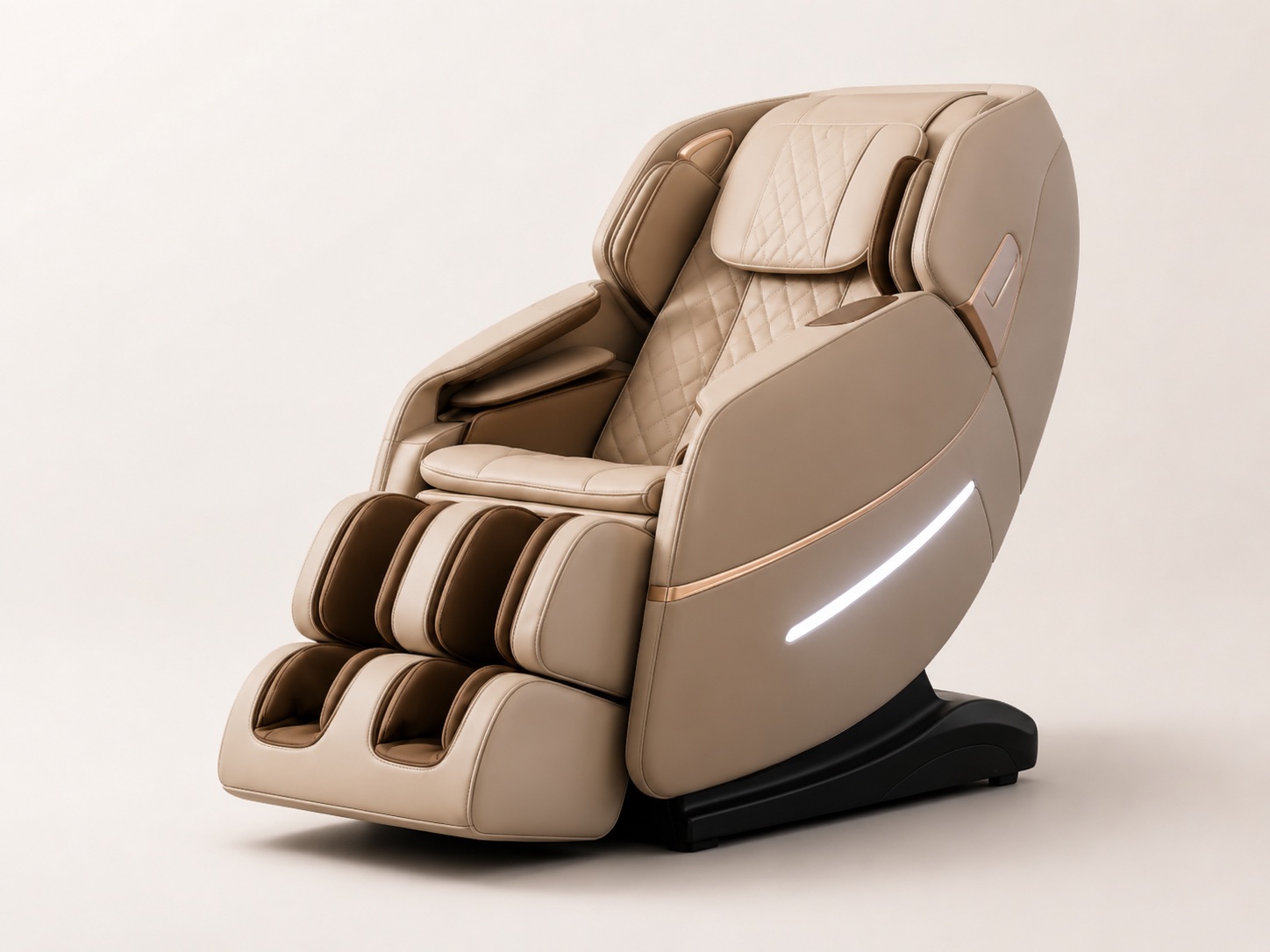
01
Answer the application before naming the material
Contact, movement, fold direction, seams, foam and cleaning exposure change by zone. The specification should follow the finished component.
01Review touch, repeated contact, seam placement and the approved surface reference.
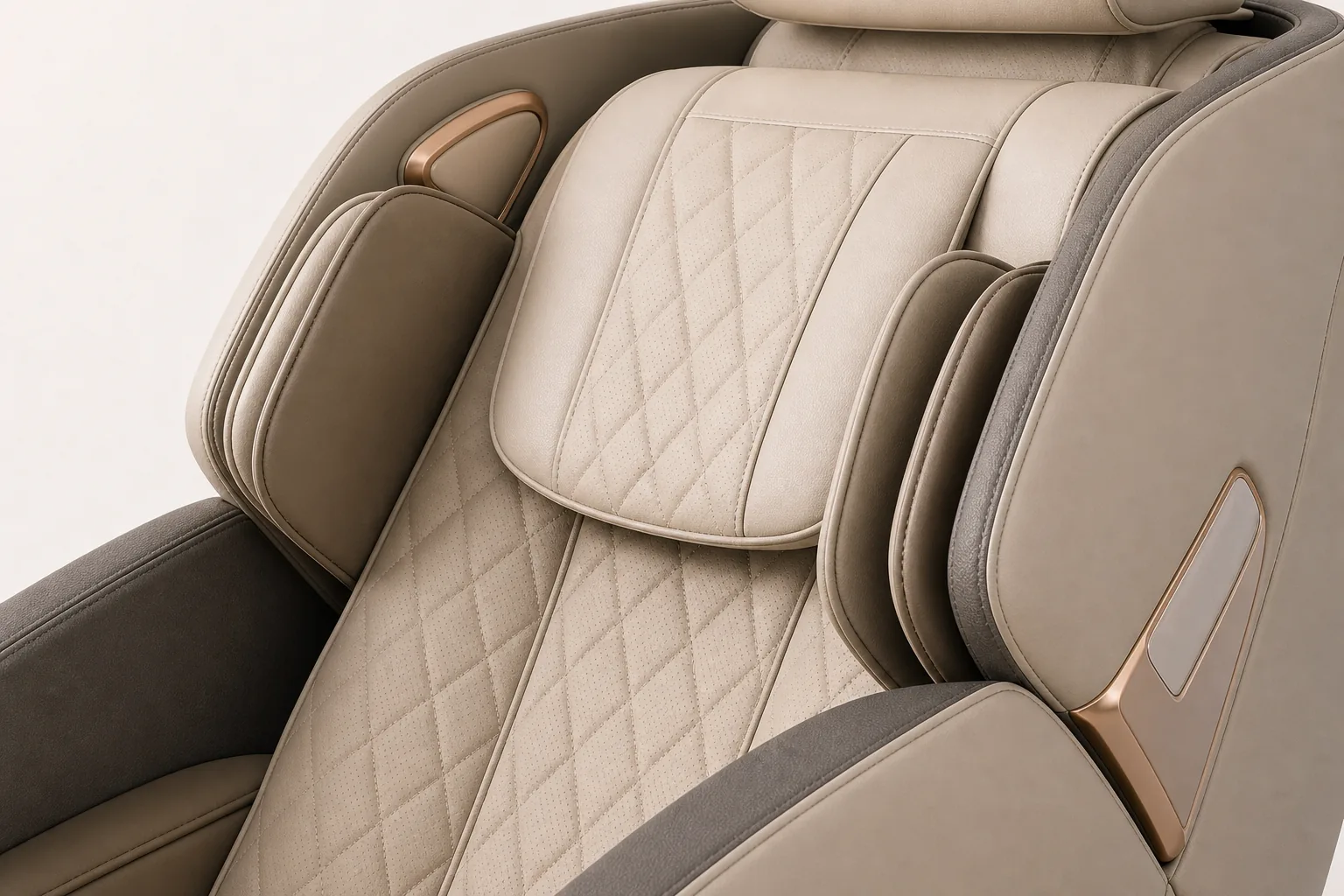 02
02Map side movement, contact areas, panel curvature and backing direction.
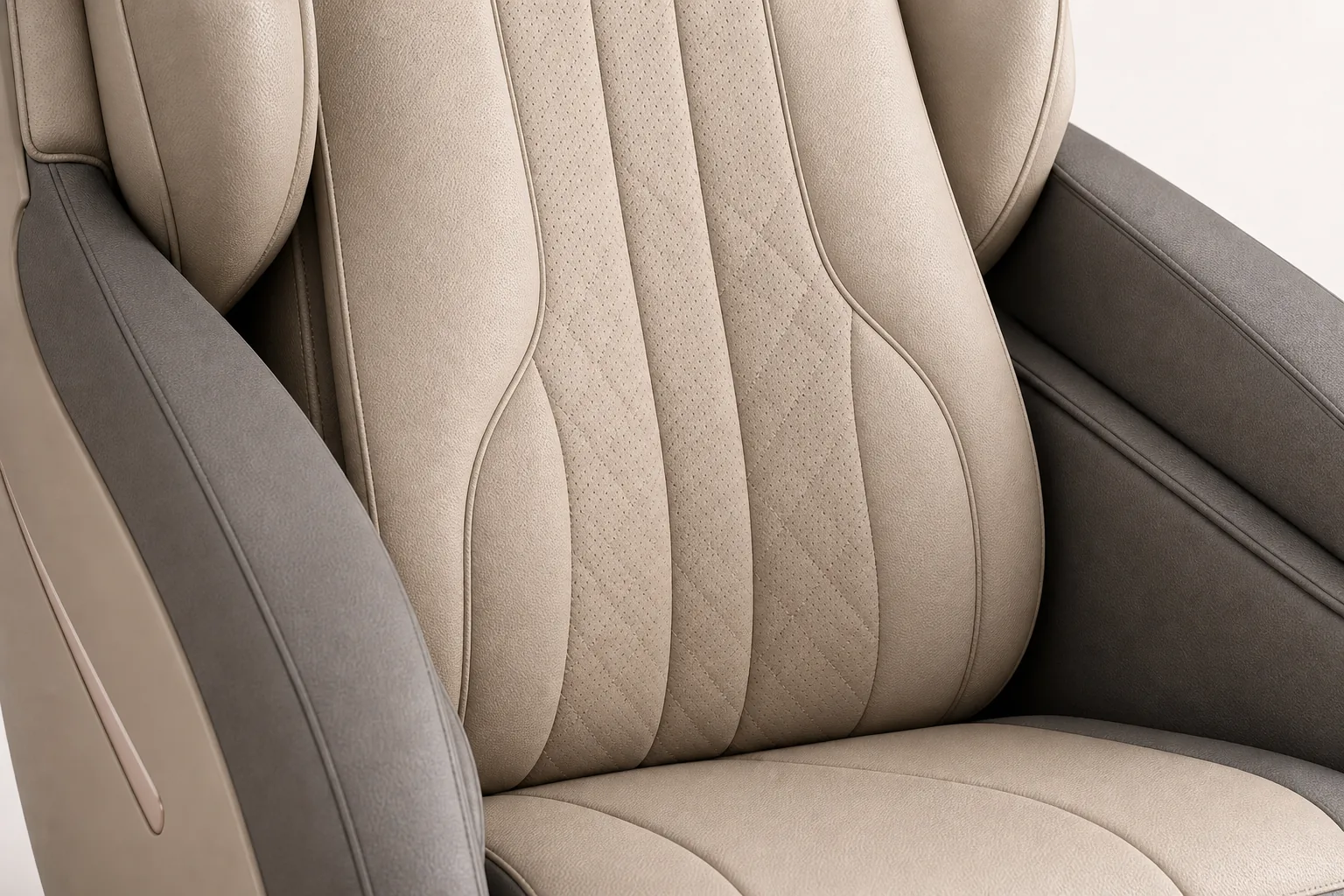 03
03Identify roller or airbag movement, fold lines and the real upholstery build.
 04
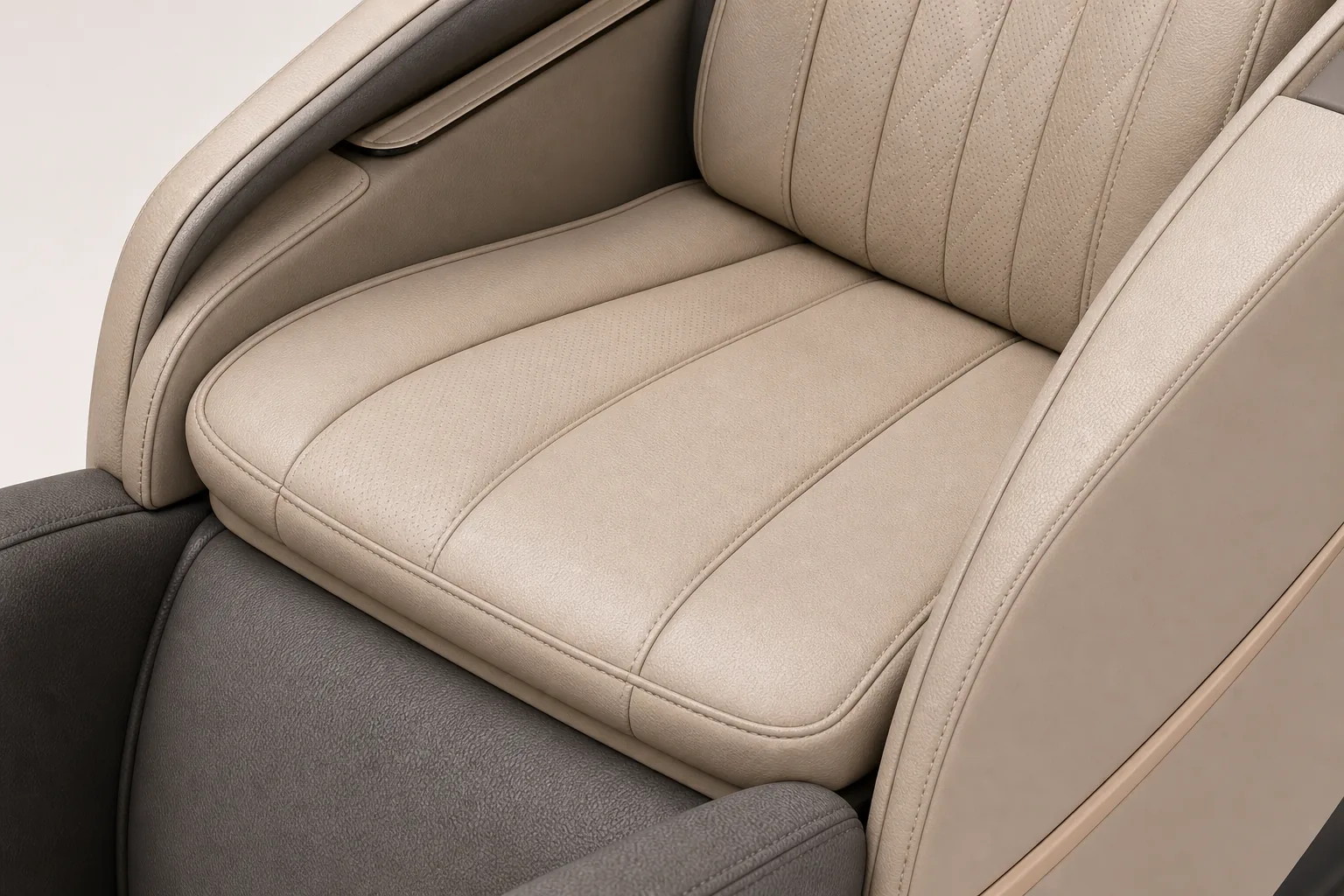
04Define load, seam layout, foam, cleaner and the required panel trial.
 05
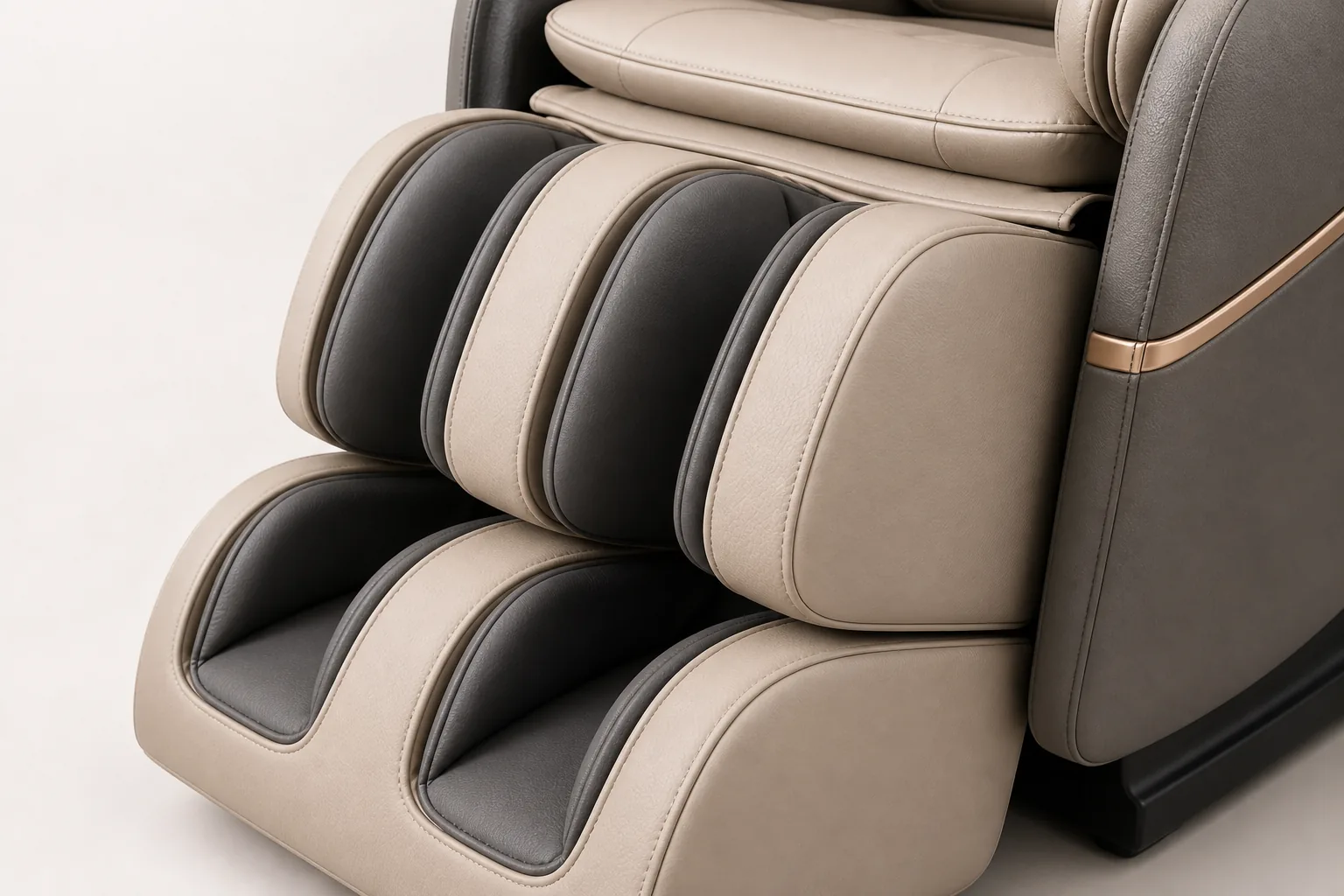
05Check enclosure geometry, rubbing locations and repeated opening movement.
 06
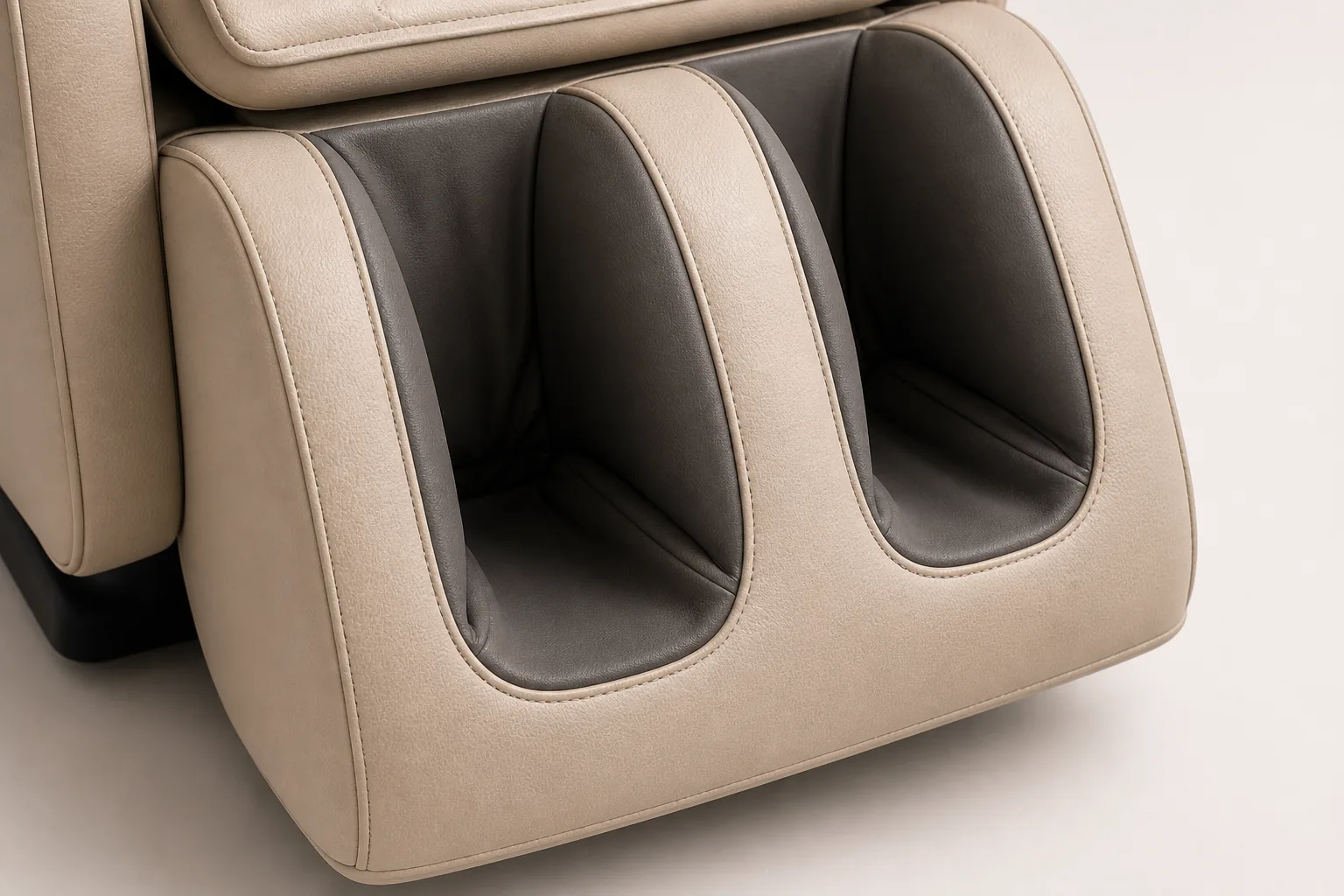
06Specify the actual chamber, edges, contact points and cleaning routine.
Concept visualizations — to be replaced with verified project photography when available.
A moving assembly, not a stationary cushion
A sofa swatch may look and feel suitable, but a massage chair introduces a different component shape and motion path. Selection should be checked on the intended upholstered panel.
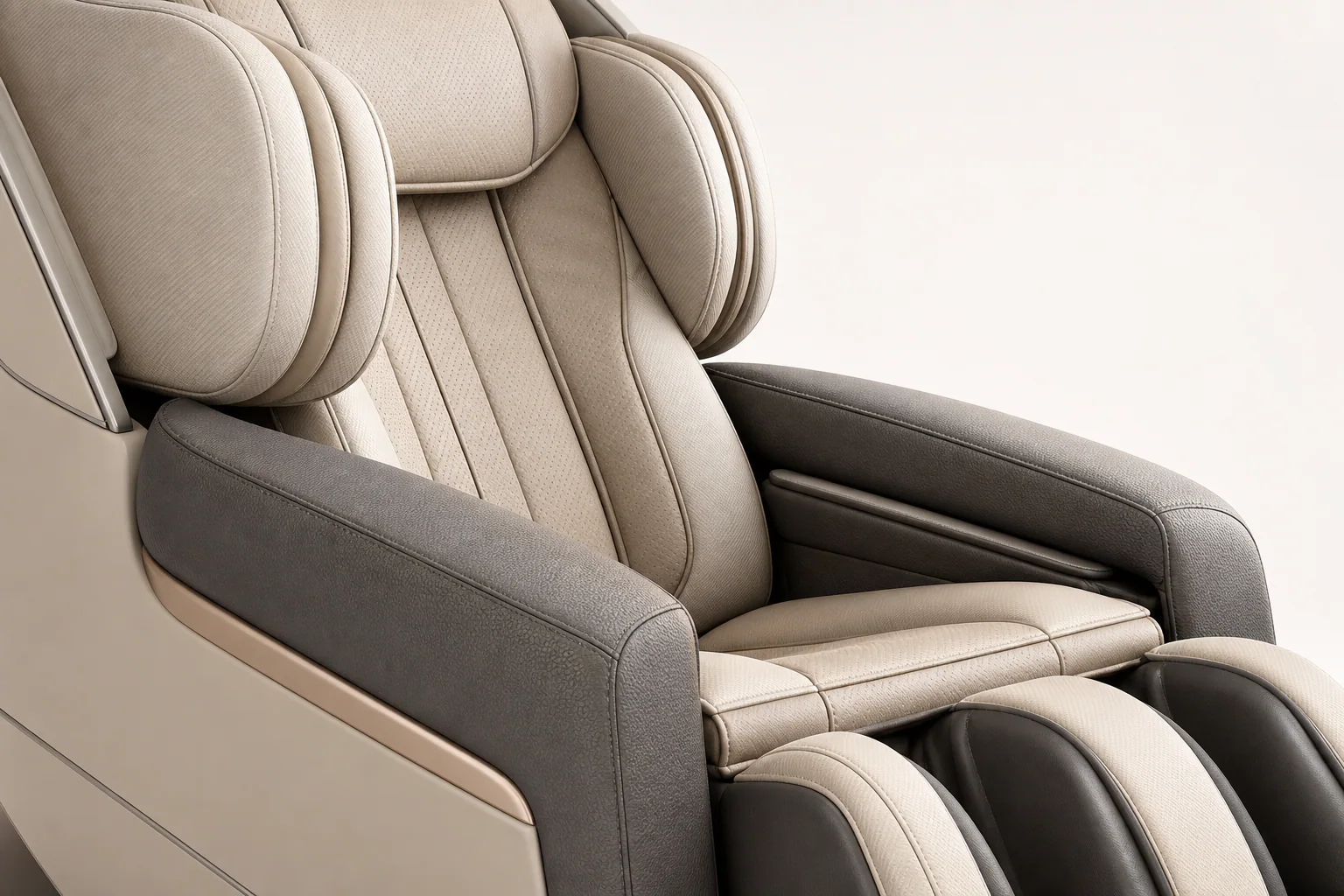
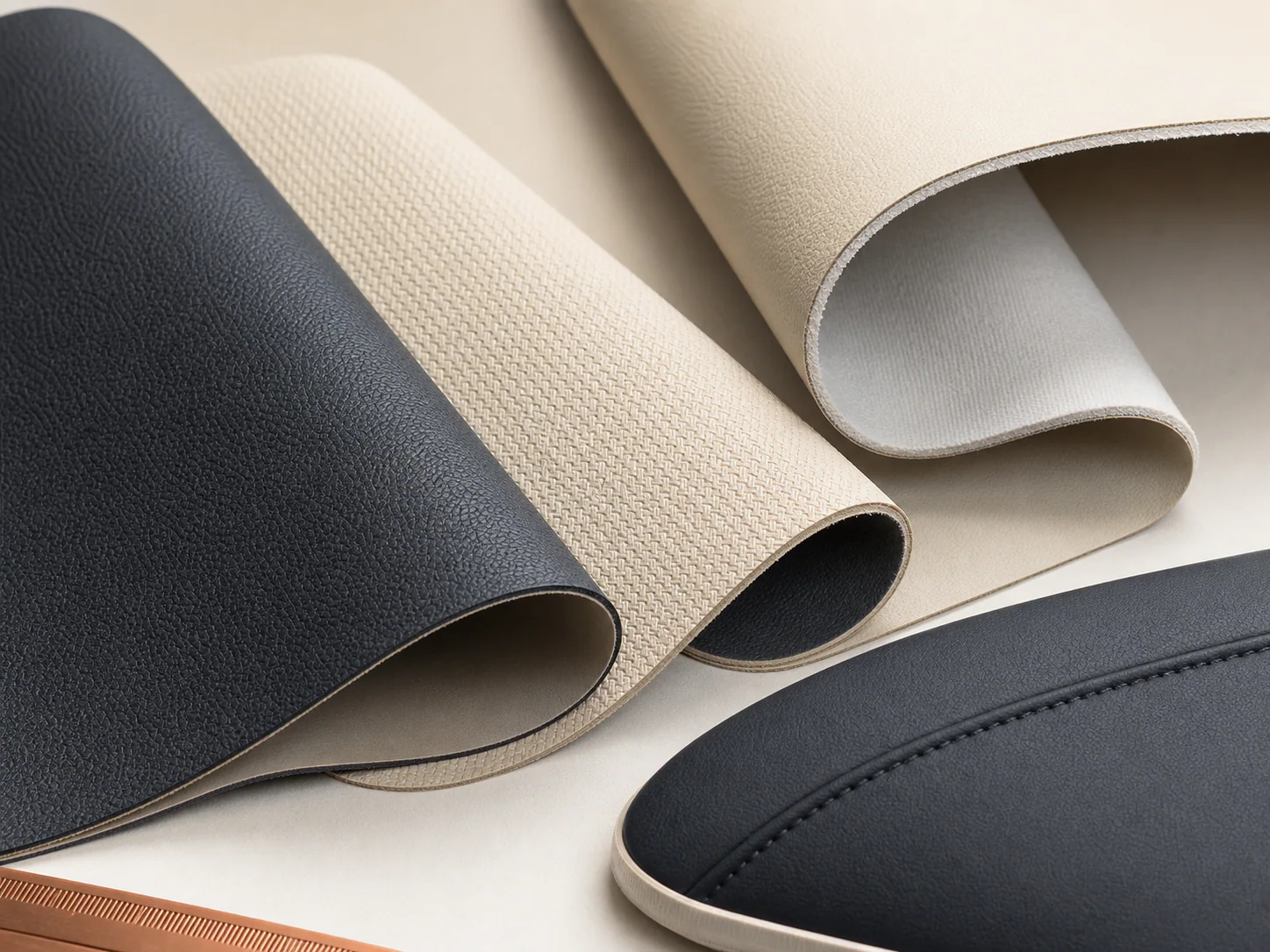
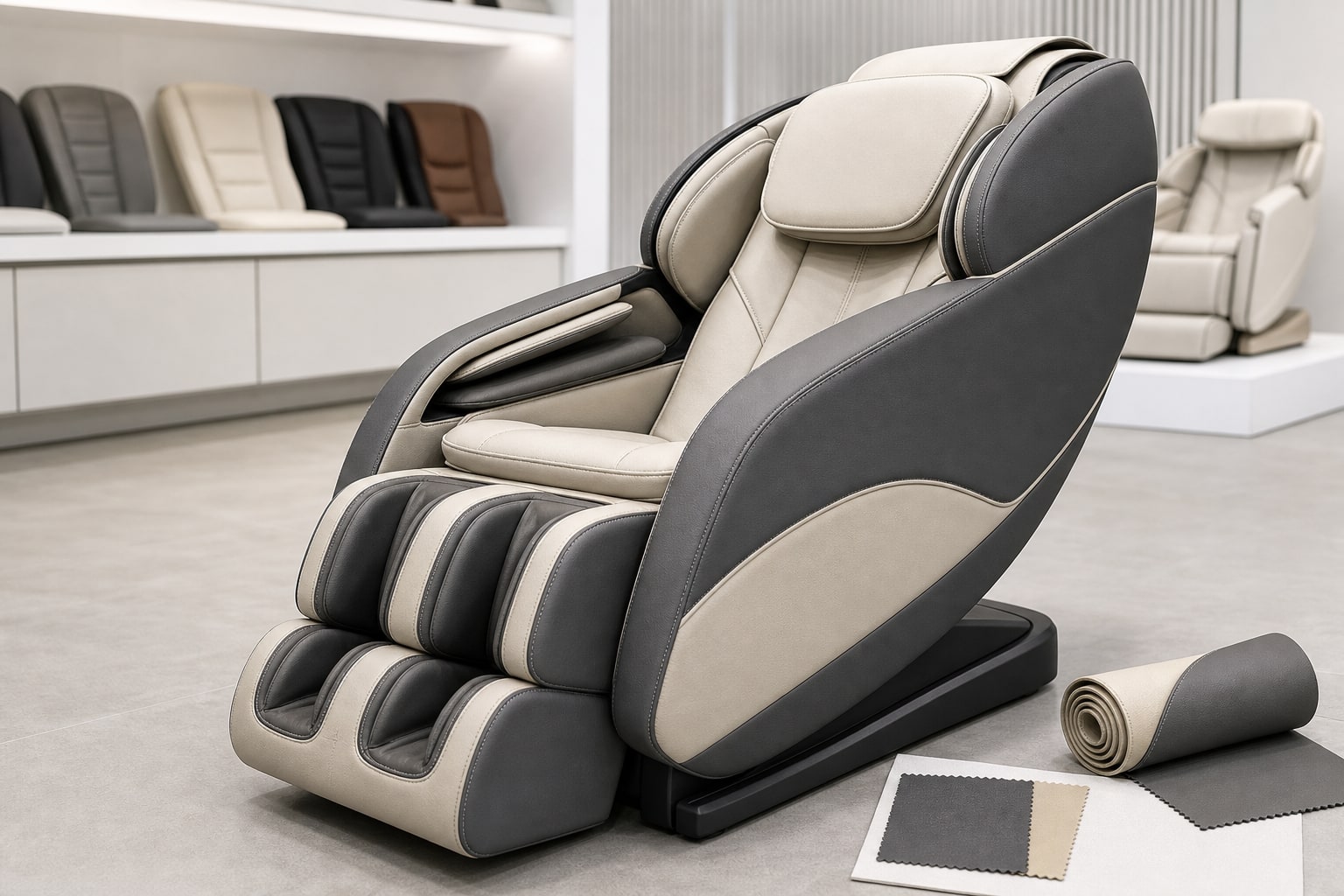
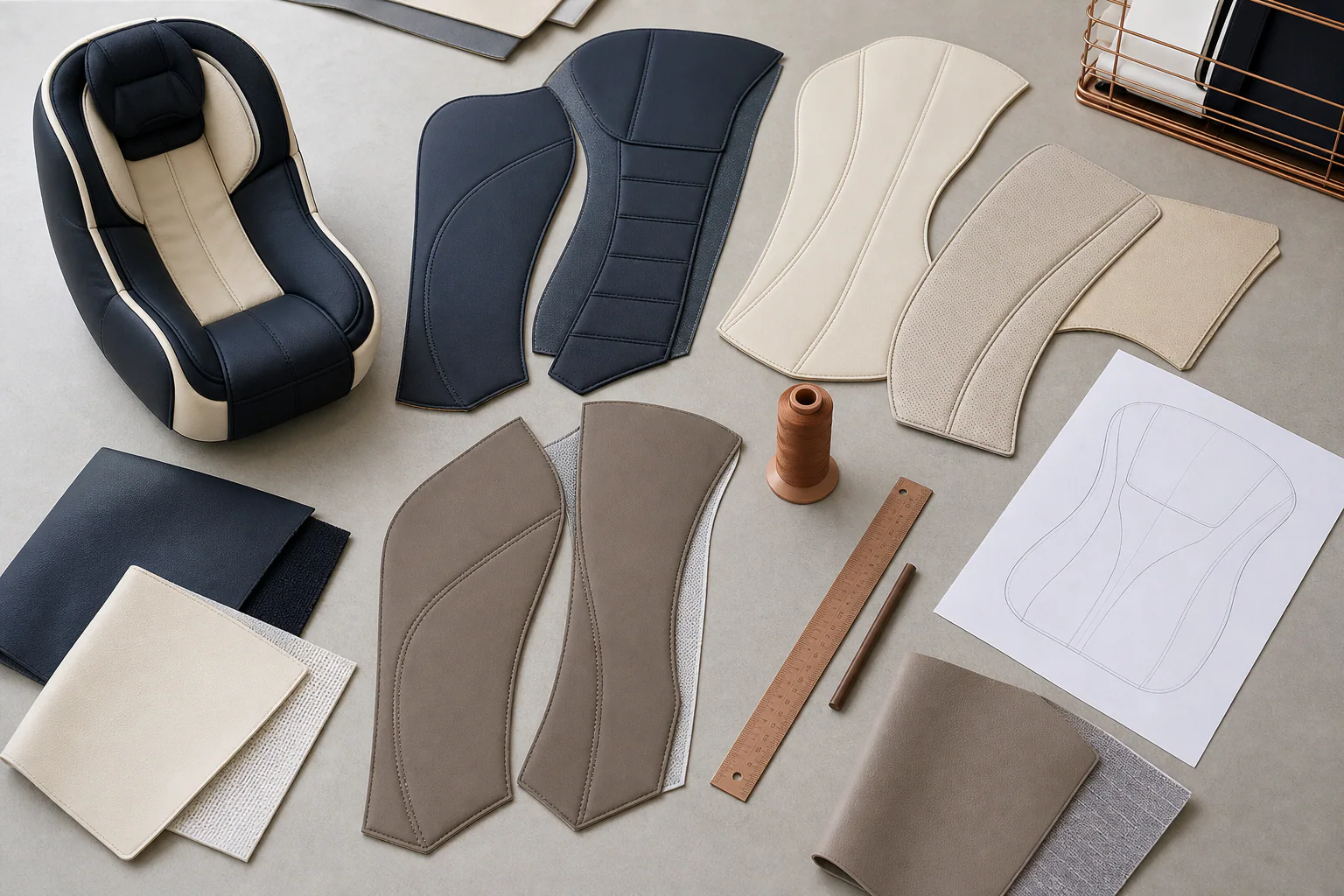
Concept visualizations — not laboratory or production evidence.
Construction starts below the surface
Non-stretch, one-way stretch and four-way stretch are construction choices led by the backing and total build—not by grain appearance alone. Machine and cross directions should be marked before cutting and panel trials.
The visible finish is only one layer
Grain, gloss, touch and color define the visual brief. Coating build, backing, thickness, direction, lamination and seam layout define how that appearance reaches the finished panel.
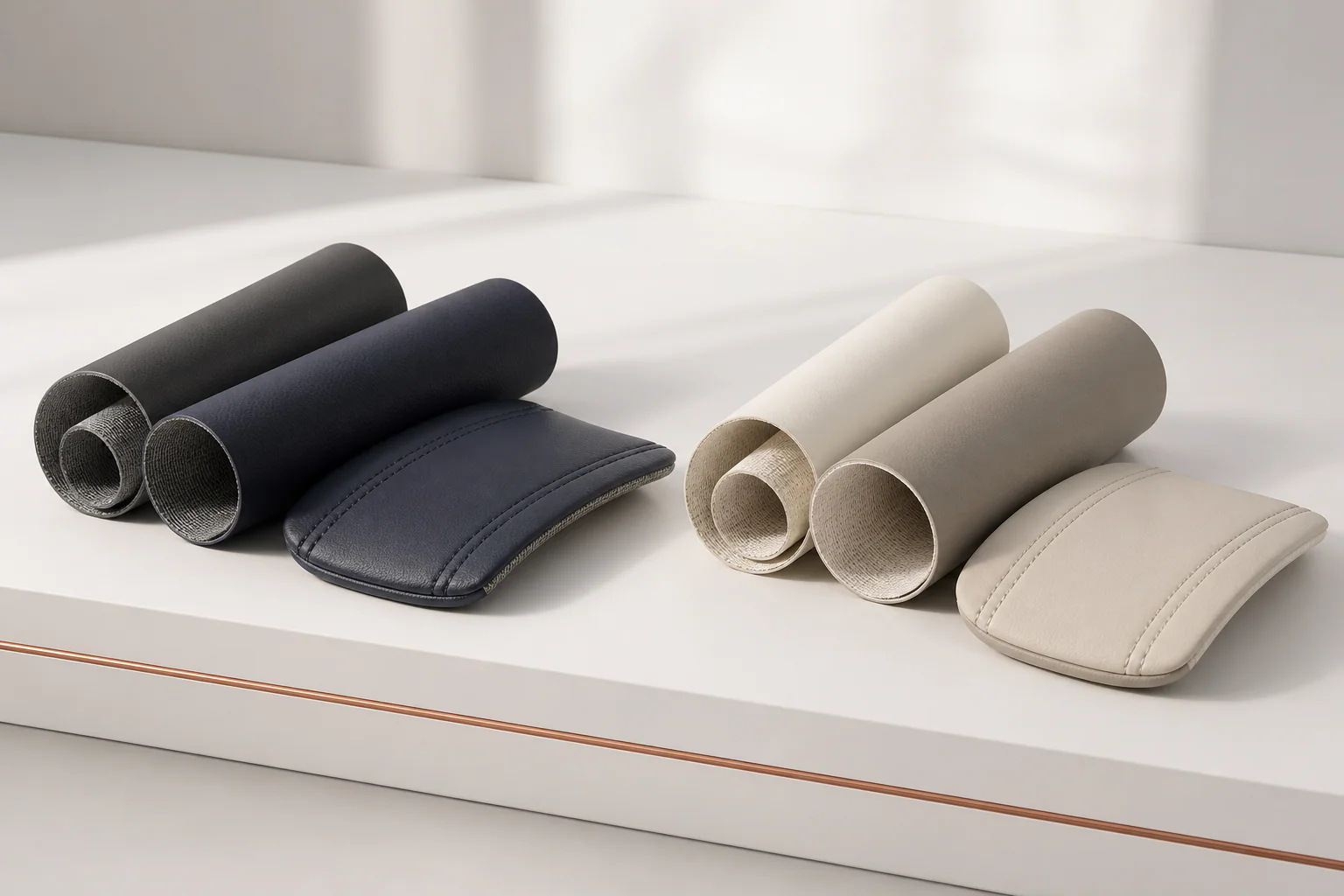
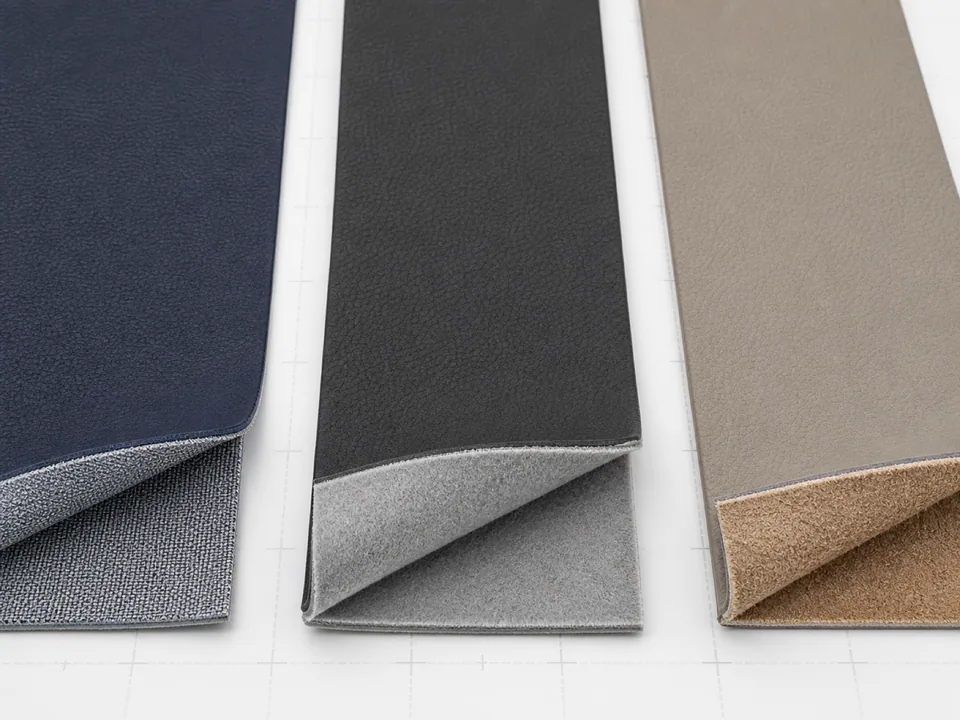
Concept visualizations — not test, certification or production evidence.
Neither route is automatically better. Compare both against the same panel movement, construction, appearance and validation requirements.
Route A
A practical development route when grain, color, hand feel, backing, panel movement and commercial target are specified together.
Route B
A parallel development route when the buyer specifies a solvent-free construction. The exact polymer, finish, backing and assembly still belong in the project brief.
Concept visualizations — the images do not establish performance, certification or production status.
You decide. We prepare and support.
ROYI proposes constructions and sample stages from the panel brief. Test items, laboratories, methods, conditions, endpoints and approval decisions remain project-specific.
 01
01Map panels, movement, contact, cleaner, market and assembly.
 02
02Name methods, conditions, sample constructions and endpoints.
 03
03Record face, coating, thickness, backing, color and grain.
 04
04Cut, sew and assemble the intended zones before approval.
05Buyer reviews results and approves, revises or rejects.
No quantitative test result or certification is presented in this concept.
Prepare the project record
ROYI’s experience includes long-term supply work with manufacturers serving the Fu’an massage-equipment production cluster. For overseas projects, the approved construction, sample, test plan and written specification remain the purchasing reference.

Product photo, model or reference unit
Moving, contact and stationary zones

Fold and required stretch directions
Route, thickness, backing and finish
Named methods and acceptance criteria

Sample quantity, volume and timing

Market and buyer-requested documents

Color master, grain, cleaner and packaging
There is no universal best material. Compare Semi PU and solvent-free synthetic leather on the intended panel, backing, assembly and buyer-defined validation plan.
It can be a practical route when grain, color, hand feel, backing direction, movement and commercial target are specified together. Confirm suitability on the approved construction and panel trial.
Consider it when the purchasing specification explicitly asks for a solvent-free construction. The exact polymer system, backing, finish and validation conditions still need to be stated.
Stretch direction is led mainly by the backing and total construction. The surface system must be coordinated with it and checked after forming.
Sometimes, but do not assume it. Moving contact zones, enclosed foot-and-calf sections and stationary covers can require different construction decisions.
Send the chair model, panel map, movement direction, surface and backing reference, destination market, test plan, sample quantity, annual volume and timing.
Email usyijayden88@gmail.comSend the chair model and panel map.

WhatsApp us+86 186 1619 6811Share photos, requirements and timing.